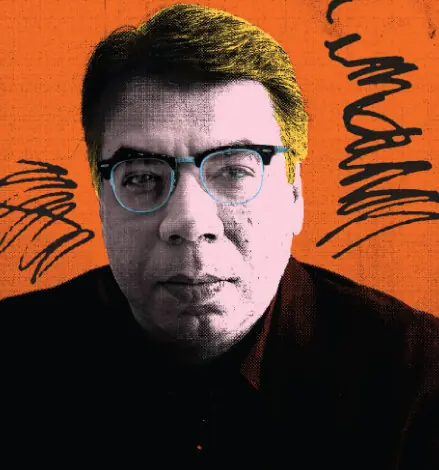
In the early 2020s, the Belgian political theorist Anton Jäger coined the term “hyperpolitics”. He noticed that, in this day and age, politics seemed to be everywhere and in everything but was not catalysing any real change. At least not the way politics used to in the 20th century.
The last century was an era of mass political activity (‘mass politics’) driven by large political parties, unions and macro-ideologies. According to Jäger, until the 1980s, political life was anchored by “thick institutions” that acted as a bridge between the individual and the state. But by the 1990s, “post-politics” had set in and replaced mass politics.
In the era of post-politics, the polity became increasingly consumerist in nature and governance was left in the hands of technocrats. Conflict was suppressed and political parties became hollow after delegating important economic and social tasks to ‘experts’ serving the interests of large banks and multinational corporations. Then, from the early 2010s, a sudden return of political energy filled the vacuum left behind by the docility of post-politics. It is this energy that Jäger calls hyperpolitics.
But this energy is nothing like the one that had carried countries towards widespread change and even revolutions in the 20th century. That energy had begun to wane from the 1980s, increasingly replaced by an emphasis on the well-being of the ‘self’ through consumerism and the commodification of identities.
Once anchored by ideologies and movements, politics is now increasingly performed through aesthetics and consumption, as ‘allegiances’ are signalled through brands rather than a sustained struggle
Mass politics started suffering fatigue and the individual became the “new self.” But the new self wasn’t the rugged, reflective and morally ambiguous manifestation of individualism of previous eras. The post-political individual was a ‘sensitive’, self-centred person entirely invested in their own ‘happiness’ and ‘contentment’. In a way, they were more manageable for governments and multinationals.
They consumed politics like they did consumer brands. In fact, corporate brands began to define the identities of these individuals just like political ideologies had done before the 1980s. They ‘became’ the brand they wore, drank, ate etc. In her 1999 book No Logo, the Canadian author Naomi Klein wrote that corporations shifted from selling products to selling ‘meaning’. In 1968, the French sociologist Jean Baudrillard had predicted that objects would no longer be valued for their use but for what they say about the owner’s identity. He was right.
According to the Polish-British sociologist Zygmunt Bauman, when everything, including politics, is treated as a consumer choice, the individual becomes more manageable. Since consumerism is about instant gratification and disposability, long-term political commitment or ideological struggle becomes too time-consuming or boring for the modern individual. Consequently, the idea of individualism also transformed.
One way to demonstrate this is through studying the way lead (male) characters in films evolved. The classic 20th century idea of individualism wasn’t detached from mass politics as such. It was very much part of it. Take the example of the cynical, hard-drinking and chain-smoking character played by Humphrey Bogart in 1942’s Casablanca. He seems uninterested in the political affairs of the world, but ends up contributing to America’s war effort against the Nazis. He realises that his anger towards a lover who had left him was far smaller an issue than the war.
Clint Eastwood’s brooding and detached character in the Dollar trilogy, directed by Sergio Leone in the 1960s, is a loner and a cynic who doesn’t say much but ends up accepting the circumstances that compel him to aid the helpless against thugs.
Quite a number of films across the 1960s and 1970s romanticised this nature of individualism. Amitabh Bachchan’s ‘angry young man’ roles in 1970s’ Bollywood films were in the same mould. Nikhat Kazmi wrote in her book Ire in The Soul that Bachchan’s characters were largely shaped to channel the anger of the people during a turbulent period in India.
However, Bachchan’s Kala Pathar (1979) is an interesting case of the transition that was to come. The angry, brooding character played by Bachchan in the film suddenly embraces ‘normal life’ by plunging into a satisfying romantic partnership. This meant that he didn’t have to bother anymore about fighting his inner demons nor carry the burden of an exploited collective (in this case, a community of coal miners). And unlike his previous angry individual films, he doesn’t die in this one.
By the 1990s, Bollywood films had completely discarded the brooding loner who accepts circumstances that compel him to fight for the people. As the idea of 20th century individualism faded into the docility of the post-politics era, the new ‘aspirational’ lead characters became sensitive souls seeking gratification through lush romantic relationships and corporate brands.
Designer homes, attire and brands became necessities for ‘happiness’ and even for self-actualisation. Religious rituals in films also became extravagant and an expression of sacralised joy. Therefore, faith was also commodified as a consumer product to ‘better oneself.’
But as all this was manifesting the era of post-politics, hyperpolitics exploded on to the scene. Yet, nothing changed much. According to Jäger, since post-politics had emptied established institutions, people entered the hyperpolitical arena as self-gratifying individuals rather than as members of a collective, cohesive body.
Jäger identifies technology as the catalyst. He wrote that social media allows for “low-cost, high-decibel politicisation.” Anyone can participate. To Jäger, though, this participation focuses more on expression rather than on sustained canvassing. In the absence of traditional institutional power to influence material conditions, hyperpolitics redirects energy toward symbolic battlegrounds, where personal consumption and language serve as primary signifiers of collective identity.
The classic Peshawari chappal, for example, which the populist politician Imran Khan preferred to wear, became a brand identity (‘Khan chappal’) that replaced traditional platform-based politics. Supporters became the brand by adopting a specific aesthetic of Khan. Buying and wearing this item functioned as a political act. Not a very convincing portrayal of mass politics, though.
This is an example of consumerist politics, a leftover of the post-politics era but ubiquitous in the era of hyperpolitics as well. The recent boycott movements against certain brands also demonstrate this. For example, most individuals feel they cannot influence the actual conditions in Gaza, so they redirect their energy into ‘consumer-activism.’ They manage their political emotions by curating their social media presence to show they are the ‘right kind of consumer’ because they consume local brands. Of course, for most, an actual physical protest outside the factories of the boycotted brands is out of the question.
To Jäger, this nature of activism produces “high heat” but “low light”, resulting in a culture defined by intense moral outrage and aesthetic posturing that rarely translates into substantive policy shifts or reform.
Published in Dawn, EOS, May 10th, 2026
from Dawn - Home https://ift.tt/hiJ5Cuo
Comments
Post a Comment